Your Seed Week 2026 tales, posts, and generous donations culminated in a wonderful moment of celebration as we reached our £20,000 Earth Raise target this morning.
We are grateful to every sharer, storyteller, commenter, and kind donor – large or small – who got involved this year. It is with heartfelt thanks that we can continue to deepen our work in strengthening the growing seed sovereignty movement in the UK. Accounting for 9 of every 10 bites we eat, seed holds tremendous potential. It is with your support that we are getting ever closer to unlocking this potential for a just and resilient food system to flourish across our isles.
Throughout the week, team members have shared their reflections on seed sovereignty, with positive stories of the momentum building in glasshouses and raised beds. From course graduates standing against ‘Big Ag’ as independent seed suppliers, to participatory breeding networks unearthing radical ways to increase diversity, or cooperatives being nurtured by the seeds themselves, we’ve endeavoured to shine a light on the overlooked heart of our ecosystems.
Dive back into their sharings below…
Future Resilience Seed Coordinator Holly kicked off the week with insights into how we can revive the incredible scale of diversity Nature can offer us, carrying the array of options needed for a truly resilient food system.
“In breeding crops for our singular vision, we’ve risked the complexity held within them. Our homogenous crops are vulnerable; if one goes down, they all go down… And in this time of unimaginable challenges, socially, politically and climatically, freeing the seed and growing our own liberation feels like an incredibly powerful act.”
For day two of Seed Week, members of the team introduced us to a seed they share a story with, each drawing on a different aspect of seed sovereignty.
“Food has been one of the ways I’ve found home wherever I’ve moved to”
“There’s so much joy to be found in diversity”

Wales Coordinator Katie shared how seeds both rely on and inspire cooperation; tending not only to the depleted diversity of our soils, fields, and meals, but also to the widespread disconnection in our communities. In her article, she introduced us to the focus of her upcoming Churchill Fellowship, learning how to germinate and tend a cooperative seed movement in the UK, inspired by the thriving ecosystem of agricultural cooperatives in India, Bhutan, and Nepal.
For Seed Week day six, North England Coordinator Catherine shone light on the growing number of independent seed producers competing not with each other, but with the system of extraction and greed they’re seeking to collaboratively replace.
“To replace big ag and the supermarkets, we need a whole new ecosystem of small farmers, market gardeners, home & community growers, all producing seasonal food for their local area. This means we’ll need a matching ecosystem of seed producers, growing regionally adapted, diverse and resilient varieties.”
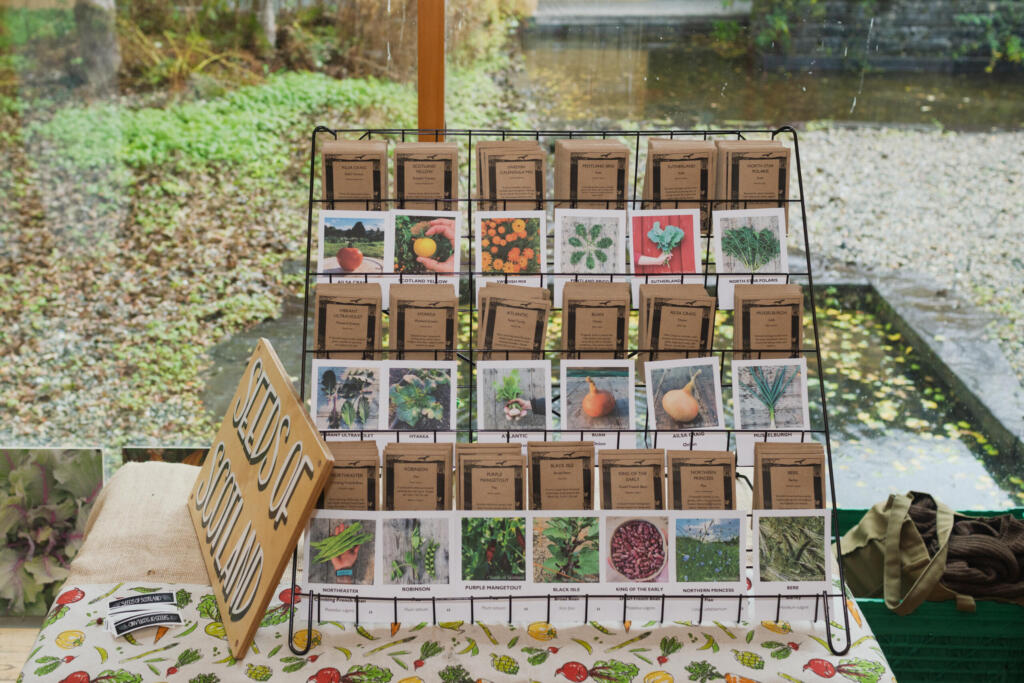
Scotland Coordinator, Sinéad, delved into the cultural significance of seed. Going beyond filling fields and bellies, we were invited to reweave ourselves back into our regional food cultures and welcome the nourishment they provide in unpredictable times.
“Willfully reconnecting with the seeds and varieties linked to our culture, our heritage, and our ancestors, as well as other cultures and heritages, means making a conscious decision to re-establish ourselves as an active member of the food system.”
We look forward to sharing more positive seed tales in the months to come, powered by the money raised this week.
