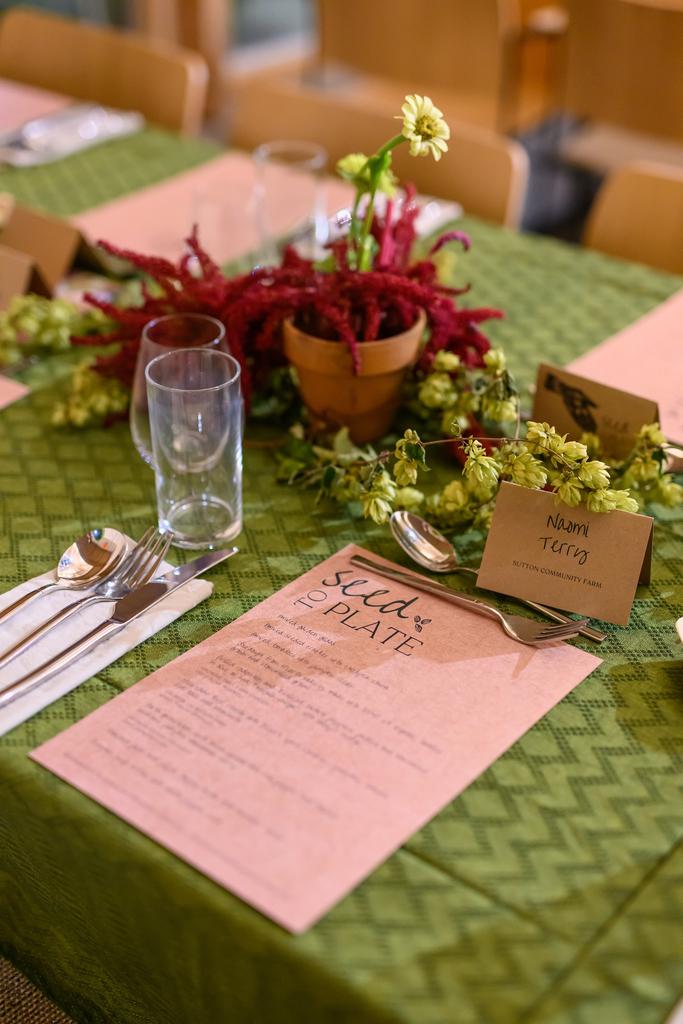
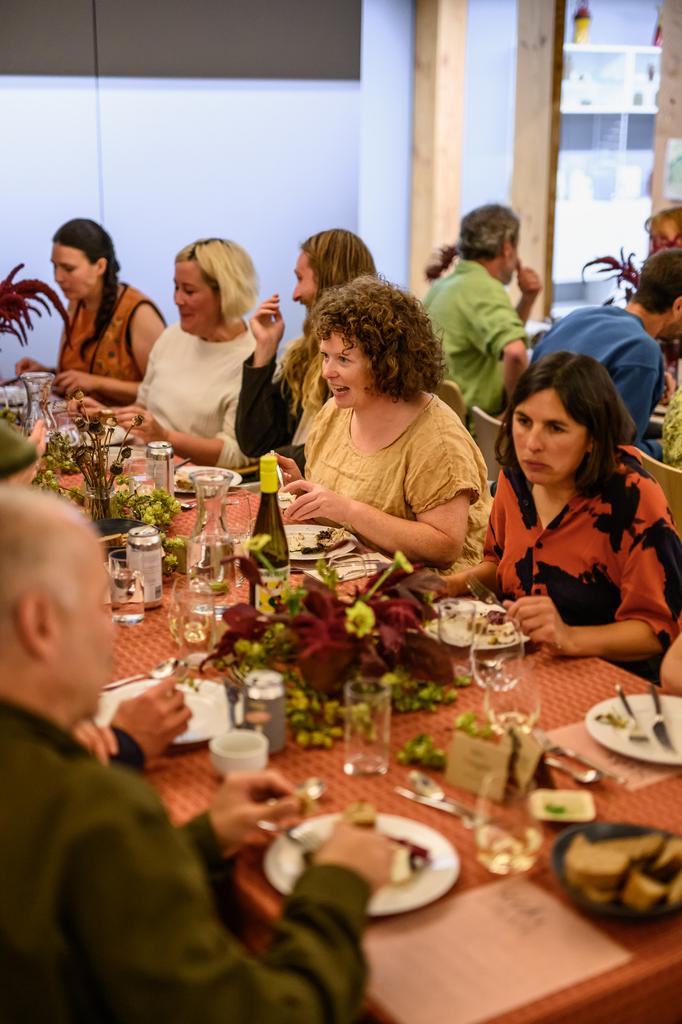
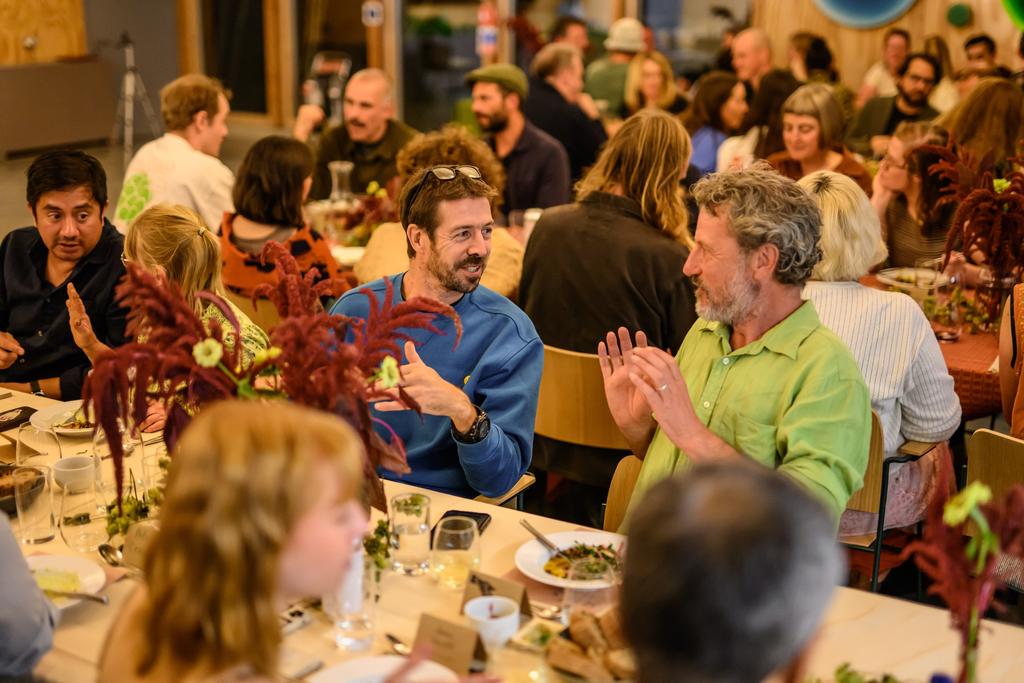
Last month, sixty growers and chefs from across the UK gathered to sample the flavours of tomorrow’s food system.
Our first Seed to Plate event, held in collaboration with Tomorrow’s Kitchen and supported by the Savitri Waney Charitable Trust and The Samworth Foundation, nurtured cross-pollination between seed producers and the hospitality industry; a vital step in transforming our food system. The exciting possibilities of deepening our collaboration were showcased across three dishes, created in partnerships between new pairings of chefs and growers. Each of the dishes featured varieties of crops grown from saved open-pollinated seed; some heritage, carrying the genetic wisdom of their ancestors, some new and adaptive to our changing climate.
On Trill Farm Garden‘s five-acre plot in Devon, Ash and Kate steward hundreds of varieties of organic vegetables, salad, herbs, and flowers, sold to local households and businesses. From many of their crops, the seed produced on the farm is saved and resown, with some also supplied to Real Seeds, Vital Seeds, and Winnow Farm Seeds. One such crop is the ‘Resilient’ shishito pepper, a ‘grex’ created by Casey Piscura of Wild Mountain Seeds in the US.
“Casey sadly died last year, and we wanted to continue stewarding some of the amazing varieties that he worked on, and the shishitos are one of those”, shares Ash. “They grow really well for us; they’re really tasty, show their genetic diversity in their plant habit and fruit shape and are truly resilient.”
A grex, sometimes known as an adaptive population, flock, or party mix, refers to a select group of crop varieties that are sown together and allowed to promiscuously pollinate. Mixing up the genetics in this way brings some of the diversity lost from modern plant varieties back into our crops, and with it, the colour, flavour, and resilience that this diversity carries. Adaptive populations like the shishito pepper grown at Trill Farm Garden provide the dexterity our food system desperately needs as we navigate an increasingly unpredictable climate. As we discovered together at the Seed to Plate event, they are also, importantly, a delight to eat.
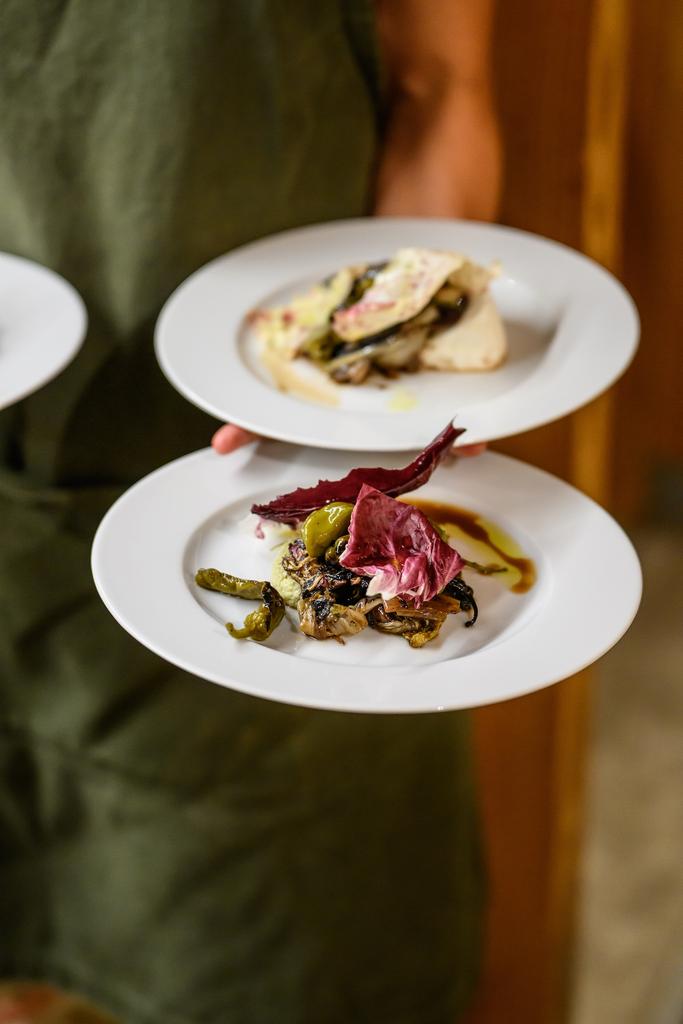
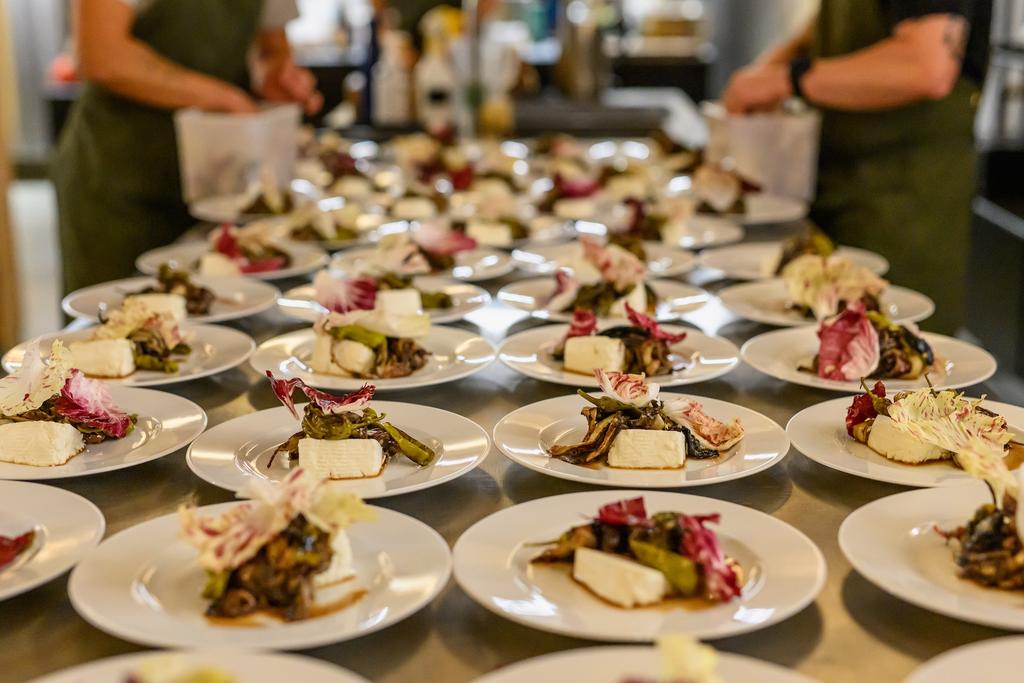
Won over by the shishito on her visit to Ash and Kate’s farm, Rose Maxwell, the Head Chef at renowned Cornish farm-to-table restaurant, Coombeshead Farm, designed a dish to let its flavours sing. Inspired by Ash’s palpable enthusiasm for radicchios, Rose’s plate also featured one of the twenty varieties of chicory he tends.
The genetic diversity of the chicory crops grown at Trill Farm Garden presents itself phenotypically in the plants, making them a joy for growers and chefs to work with, explains Ash. “It’s interesting, exciting and actually really useful, as it means that some plants take a little longer than others to mature, some are slightly sweeter than others and the range of colours and patterns is vast, which is great for the salad mix.”
The love both Ash and Rose share for food was evident in the beautiful ode to the shishito pepper and radicchio they co-created for the event, and the extent of their collaboration may be just at its beginning.
“I loved talking about the stories of seeds as we walked around the growing spaces”, Rose recalls. “Ash has such a passion, not just for the produce he grows and the land he stewards, but for the people he works with and employs. As ever, the resilience, adaptability, positivity and passion of farmers is something all chefs should be exposed to and inspired by.”
“When I was asked to come to the event, I said I would do it for the Hebridean Rye.” – Lisa Houston, Lauriston Farm
In Edinburgh, Lauriston Farm is run by a majority-women workers’ cooperative who tend food and seed on the 100-acre urban growing site. Grown, resown, and shared on the Uists in the Outer Hebrides for centuries, Lauriston Farm is home to an ancient grain, originally part of a companion mixed cereal landrace that sustained Scottish communities and their livestock for generations: Hebridean Rye.
“There are many things I love about the rye,” shares Lisa, “first, as a wholegrain, it’s delicious, nutty and rich tasting, and in taste tests of wholegrains it’s often the standout favourite.” Lisa explains that it is also one of the most nutritionally rich varieties of rye grown in Scotland, as well as one of the most hardy; “on the coast, in very sandy soils, being blasted by the Atlantic wind and rain means it’s superbly adapted to some of the harshest conditions in the UK.” It was a joy to taste this piece of Scottish heritage, paired with Desert Spirit Landrace squash and diaspora greens.
The Desert Spirit Landrace is another flock originally created by Casey Piscura of Wild Mountain Seeds. At Lauriston, it is stewarded for Seeds of Scotland. It is also grown by the Crowd Breeding Network, a collective of growers working to reclaim grower-led plant breeding and reintroduce diversity and resilience into our food system, of which Lauriston is a part. Crops are selected and saved for flavour, size, and storability, creating a squash that is well tailored to hospitality.
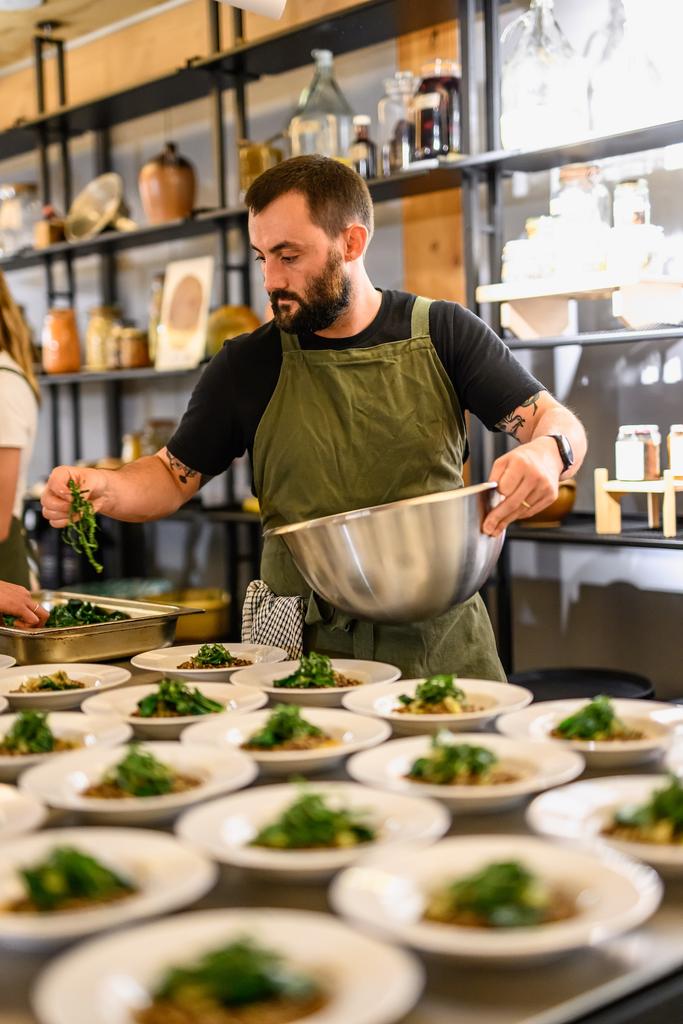
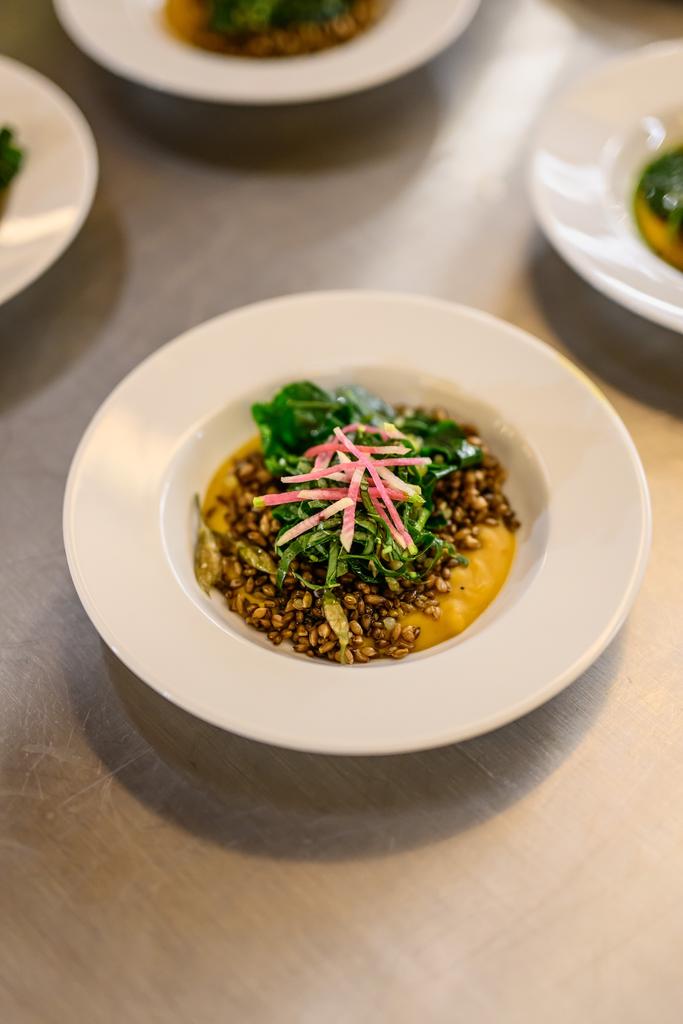
Tomás Gormley is the chef and owner of Cardinal, a 24-cover tasting-menu restaurant cooking modern Scottish food over fire with produce grown in his kitchen garden. Paired with Lauriston Farm, he had the experience of getting to know these less common crops.
“I think the experience opened both of us up to new ways of working,” recalls Tomás, “for me, new ways of interacting with growers, and for Lauriston Farm, a clearer sense of how they can fit into a restaurant’s supply chain.”
As growers’ livelihoods are put under increasing pressure, tending crops suited to chefs, and having an engaged network of people who understand and appreciate the varieties you grow is more valuable than ever. Reciprocal relationships are central to a flourishing food system.
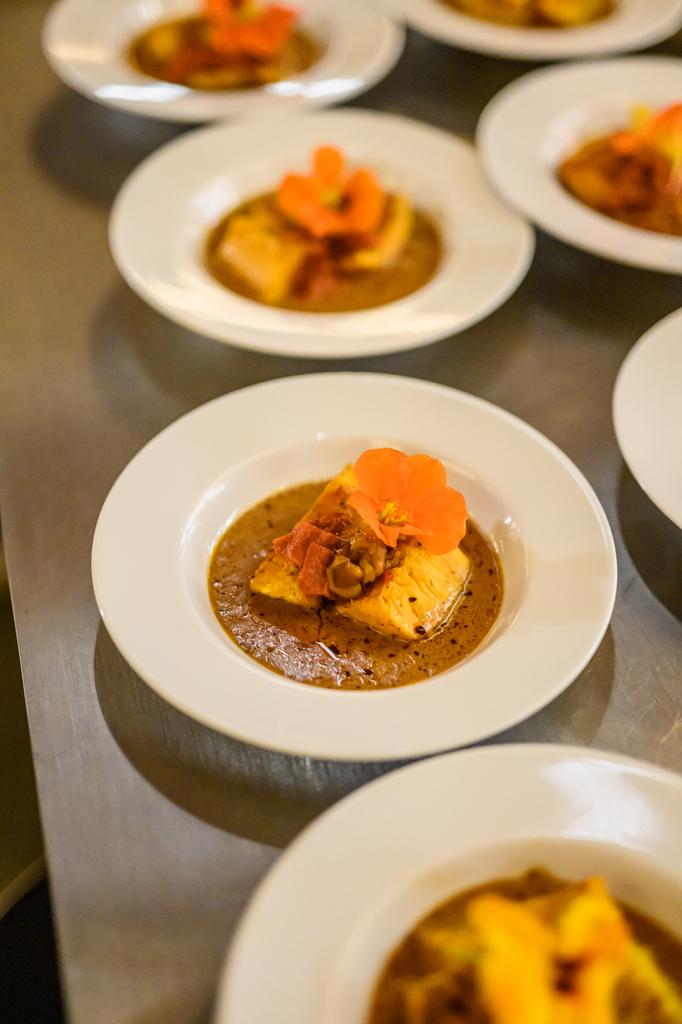
Close relationships between growers, particularly seed producers, and chefs offer unique opportunities and benefits. At Oxton Organics in Worcestershire, Jayne Arnold has been experimenting with seed stewardship, minimum tillage, soil inoculants and living pathways to produce food full of both flavour and phenolic compounds. Since 2021, she has been working with diverse populations, two of which we were lucky enough to sample at the event.
For the past five years, Jayne has been saving seed from her own diverse population of squash, carefully selecting for flavour, as well as thickness of flesh to increase the ease and bounty of preparation in the kitchen. Not only are the squash becoming more delicious and with thicker flesh each year, they are also becoming ever more abundant thanks to their wide array of genetics.
“Four generations on, the squash have adapted so well they are the stars of this very difficult season”, shares Jayne. With years of genetic memory and a wide diversity of characteristics to tap into, the crops remain productive across a variety of conditions and can respond and adapt to more and more challenges, unlike typical varieties. The yellow and red peppers are also in their fourth generation of life at Oxton Organics. This year, for the first time, the local community were invited to send seed back to the farm from any standout samples, to ensure next year’s harvest is imbued with their flavour, and tailored to those who will be eating it.
“Involving first our customers and now SongSoo and yourselves to be part of their journey will bring a warm glow to my heart as I work with these crops in years to come,” Jayne confided in us at the event.
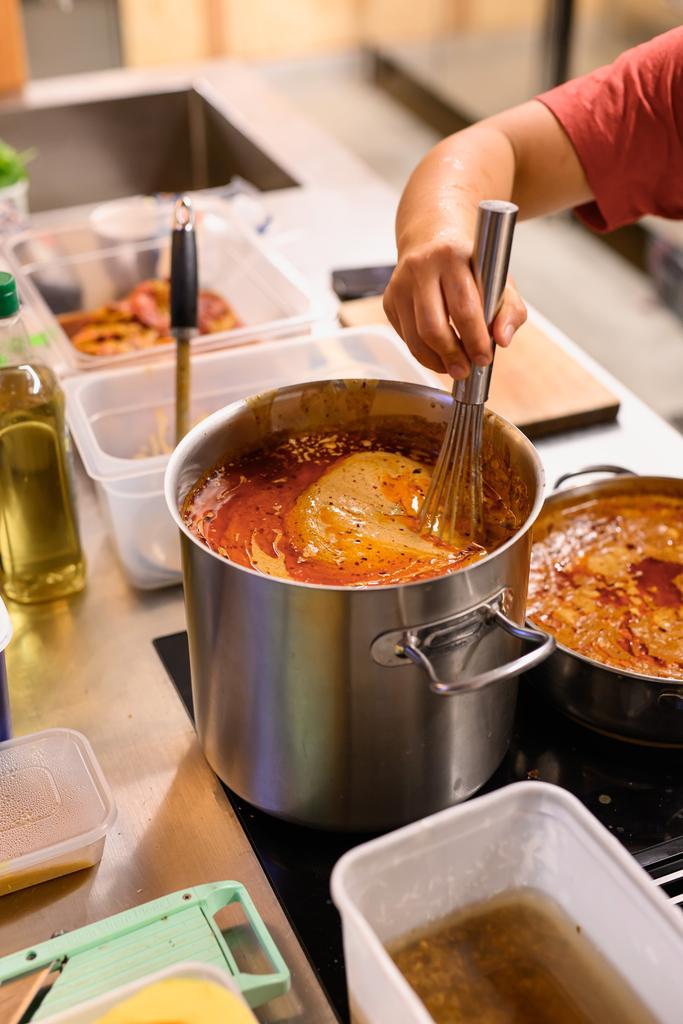
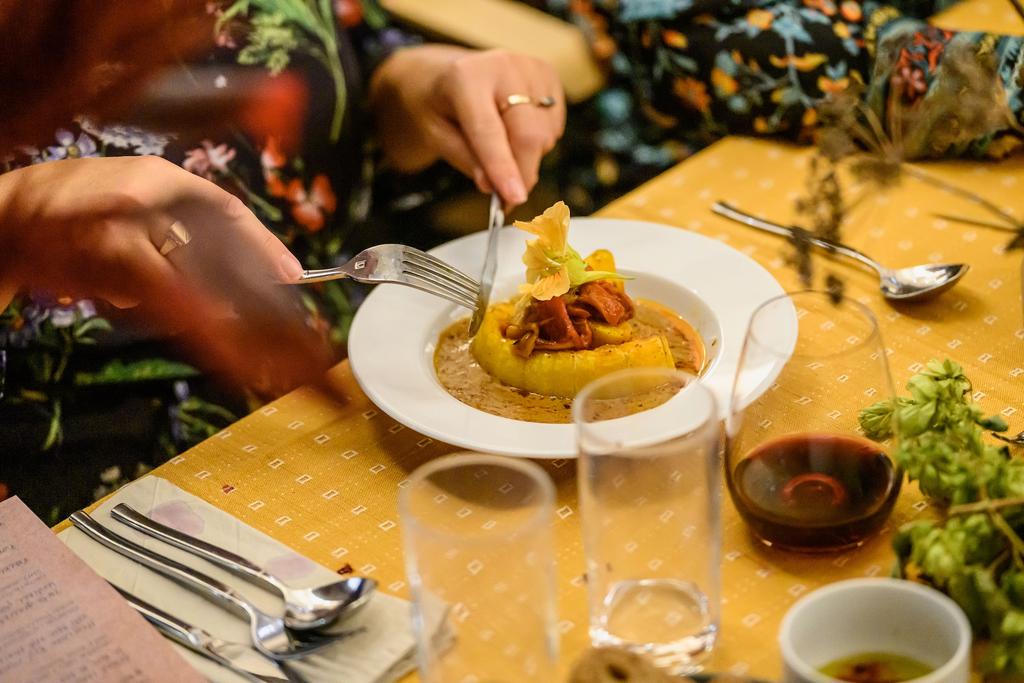
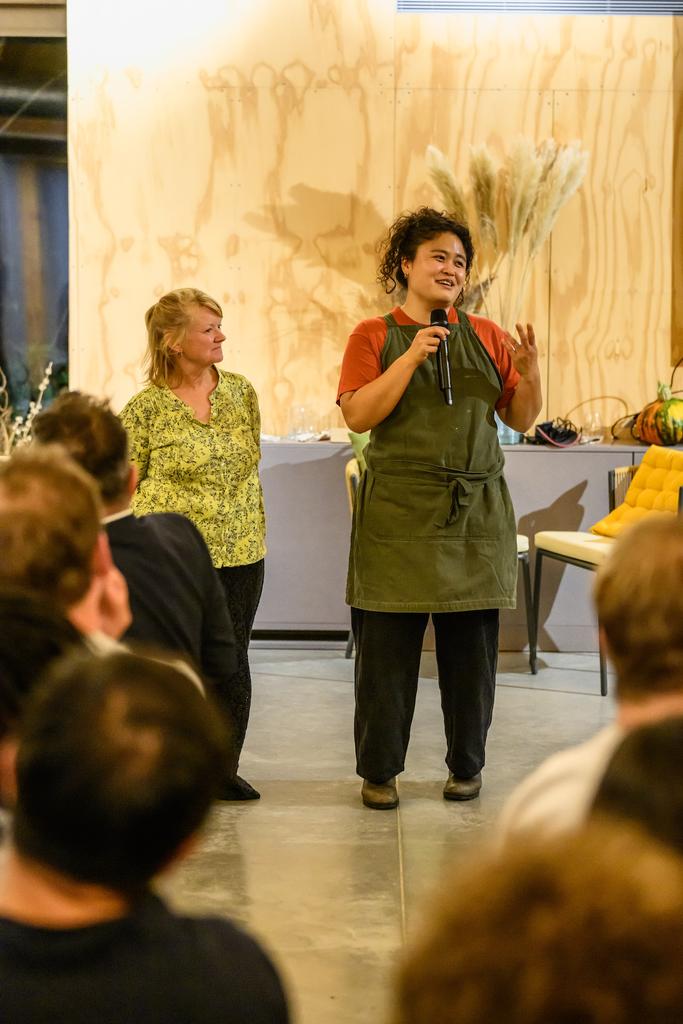
Songsoo Kim is Head of Sourcing and Development at Super8 Restaurants, working across Kiln, Smoking Goat, Mountain & Brat. She had the opportunity to experience the culinary qualities of Oxton Organics’ squash and peppers when crafting the incredibly tasty massaman curry she shared with us on the night of the event.
Songsoo is no stranger to collaborating with growers; her work focuses on building relationships with regenerative and small-scale farms and deepening the connection between kitchens and the land.
“It was a gentle afternoon at Oxton Organics, where Jayne made sandwiches for me and her grandson, and we walked around the farm. She was so keen and deep, and made everything feel so natural, that her will seemed at one with nature,” Songsoo recalls, reflecting on her visit to the farm. “For someone living in London, chasing and being chased by stimulation and dopamine-driven sensation, walking through the no-till polytunnels forested with anise hyssop, basil, tomatoes and red and yellow peppers was a reminder of what purpose feels like.”
Just as growers can gift chefs more interesting, flavourful crops, suited to both kitchen and plate, chefs have much to offer growers, too. By buying, promoting, showcasing, knowing these underused varieties, those in the hospitality industry can shift demand, bringing income and purpose to growers and allowing our food system to have the diverse foundations it needs to respond to ecological shifts.
“This visit showed me that so many growers who save seeds hold on to purpose, a will for life, and the belief that we are nature, and that through their everyday work, their yearly commitment and their love, offered without boasting, we are given a future,” adds Songsoo.
