Interest is peaking across UK agroecological farming networks to share machinery. It makes sense. As agroecological growers are squeezed harder each year by unpredictable climatic conditions and the industrialised food system, there has never been a better time to pool resources. Why spend a fortune on a piece of equipment you might only use a couple of times per year when it could be shared with others? For some individual growers, the purchase of new machinery to help them scale up their production is simply unattainable. But by forming a machinery ring with other growers, purchase costs can be shared and grants accessed.
Machinery rings are not a new concept. Stories of the past reveal that UK farmers used to not only help one another out in the fields on harvest days and at times of crisis, they also shared their equipment with their neighbours. In a time when geographical community was stronger, the sharing of machinery was far more commonplace. Nowadays, machinery rings have been formed to formalise these sharing arrangements, often facilitating machinery sharing across a wider area, between farmers who do not already know one another over the field fence.
In the UK, we have several large machinery rings, used by conventional farmers looking for kit such as combine harvesters, large seed drills, chemical sprayers and haulage trailers. Lincolnshire Machinery Ring has 550 members across the Midlands. Pembrokeshire Machinery Ring has over 800 members across Wales. The Association of Scottish Machinery Rings lists 9 machinery rings across the East Coast of Scotland. These machinery rings work well to serve their members’ needs, often facilitating buyers’ groups for the collective purchase of fertilisers, animal feed or fuel.
Cooperation is key for supporting farmers in the agroecological movement. This can be seen across the globe. The French Cuma cooperatives have been running for over 80 years, with over 9,000 farmer-led cooperatives on their books. They explicitly state they are here to support small – medium scale farms, many organic, many agroecological. During recent wildfires in France, the Cuma cooperative mobilised to use their machinery to spread water and build firebreaks, citing mutual aid and solidarity as their motivation.
Machinery rings can also extend to machinery specific for seed production. This can work especially well when machinery is only needed once per year, at harvest time. Farmfolk Cityfolk in Canada have developed three mobile seed processing trailers, each equipped with an array of seed cleaning tools, including hand screens, an air separator, a Clipper office tester, threshers, the famous Luterra winnow wizard and more. Moving shared machinery around allows farmers to reduce the mileage that their crops have to travel, while still sharing much-needed resources.
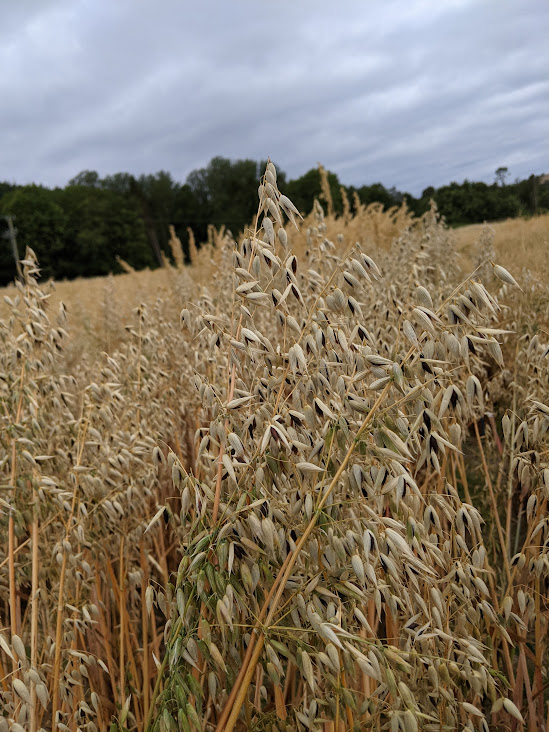
In my work as the Wales Coordinator for the Seed Sovereignty Programme, we are seeing a surge in interest in setting up machinery rings. In Wales, we facilitate the Llafur Ni collective, a group of farmers and seed diversity enthusiasts working together to revive rare Welsh oats. When we started our journey to revive oat diversity in 2018, we had no idea of the processing issues ahead of us. The oats we work with – varieties such as the ceirch du (black oat), Hen Gardie, Radnoreshire Sprig and ceirch llywd (grey oat) – are all hulled. With no oat mills left in Wales, we discovered that we had no way to dehull our oats for human consumption. We would need to obtain our own equipment in order to get our oats onto Welsh plates.
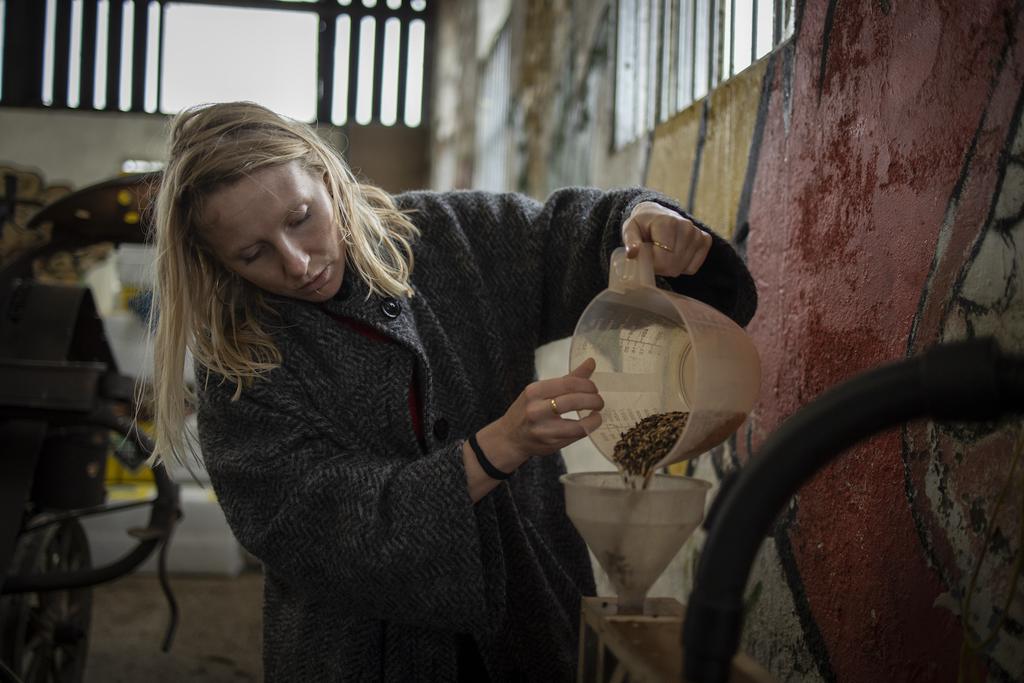
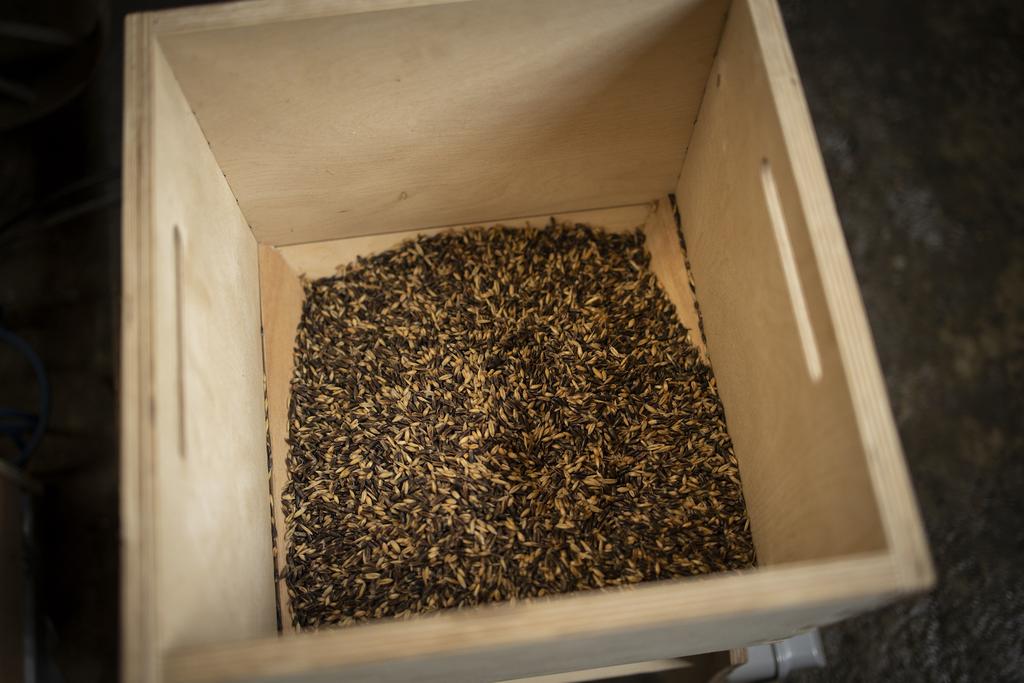
Following many years of research into small-scale solutions for oat processing (and the commissioning of a special tiny oat collider in order to dehull the oats for taste tests), we came to the conclusion that we needed to start purchasing collectively owned machinery. Seizing the offer of a partnership with a Welsh brewery willing to use our oats for a special run of beer, raising much-needed funds for our group to purchase more equipment needed to get these oats into food products, we realised we needed a grain cleaner. We were lucky enough to win a micro grant from the Kreitman Foundation (facilitated by the Seed Sovereignty Programme), allowing us to address this bottleneck by purchasing a collectively owned grain cleaner.
In this guide, I will share our experiences of buying one single machine and working out how to share that machine. I will outline our unique experience, the challenges we encountered and the solutions we came up with.
It is important to note that we are not experts. We are not suggesting that the way we have done things will work for your situation. We are simply passing on the lessons we learnt, along with some questions to consider. We hope that you can use these insights to decide what will work best for you, in your unique situation.
Our group was very focused on the growing of oats and knew very little about the equipment needed to process them. We began to informally research what we would need to do, quickly discovering that the information we needed was not readily available.
The main issue with identifying the machines we needed was scale. Because we were growing on a small scale – having everything from a few kilos to a few tonnes of our various rare oats – we were sitting in an unusual niche. While smaller-scale traditional oat mills would have matched our scale perfectly, they had all sadly fallen into ruin. Larger-scale commercial oat processing plants exist in Crewe and Scotland, serving the UK’s larger-scale oat producers. But we simply didn’t have the quantities to run through these large production lines. With no one operating at a comparable scale to us, it was very difficult to understand what machines we were even looking for!
Our research phase took many years of informal conversations, tapping into alternative grain networks and putting the exposing question out there – “we don’t know how to do this!”. We emailed people we had never met. We had calls with people in Norway and Ireland who were processing oats, only to discover that they had found a solution for small-scale oat processing but didn’t want to share this trade secret.
Invaluable to us was the Grown in Totnes Toolkit. Driven by community food resilience, these people had grown oats in the South of England and created a processing hub in which their oats were polished and dehulled for local consumption. Although they never managed to stabilise the oats after dehulling (an issue unique to oats and something we needed a solution for), their experiences with the earlier parts of the process were like gold dust to us.
We also found that our partnership with IBERS plant breeding centre in Aberystwyth to be extremely illuminating in allowing us to see oat processing machinery suited to small-scale experimental plots, which were actually closer in scale to what we were growing than the larger-scale arable farmers.
Ultimately, there was nobody processing oats for human consumption in the UK at the scale we wanted to do it. Having gained a patchwork of insights into what the process might entail and where the gaps were, we were able to create a list of the steps we needed to complete – cleaning, drying, dehulling, stabilising, storing – without knowing the specific machines we needed.
The need we identified was partly material – we already had some oats we wanted to grow, and partly speculative – we knew that we wanted to expand our oat production, but it wouldn’t be worth farmers doing this if they didn’t have a route to market for the oats. We decided to buy some shared machinery as a relatively small group of active members. Adopting a ‘build it and they will come’ mentality, our hope was that, in having the machines available for oat processing, we would be able to convert some of the growing enthusiasm to grow oats that was often directed towards us into action.
Having identified the first step in the oat processing journey – seed cleaning – we decided to start here. We applied to the Seed Sovereignty Microfund, which was offering funds from the Krietman Foundation to help agroecological groups in the UK to overcome barriers in accessing equipment for seed processing. Having outlined our recent partnership with a Welsh brewery who were willing to make a beer from our oats, offering much-needed income to the farmers growing our rare oats, we had a good case for needing a seed cleaner to process the oats to a high enough quality for the brewery.
We were delighted to receive approximately 5k from this fund, which allowed us to get into the nitty-gritty of which machine to buy.
At the application stage, we had chosen a seed cleaner from Polish machinery company Alastain Agro. In all honesty, this machine was chosen based on Google searching and surface-level decisions such as price and availability. We asked around our grain contacts in the UK to discover if anyone else had used this machine, but they hadn’t. Finding other people in the UK to be either using vintage grain cleaners (on a smaller scale) or larger grain cleaners (beyond our scale), we decided we would have to take a ‘gamble’ on an imported machine suited to our scale.
The Alistain Agro Aerodynamic grain cleaner ALS-3 gen-3 was chosen. Before we purchased this equipment, we asked a lot of questions of the sellers. These questions included: does the machine run on single phase electric, is it suited specifically to oats, how many tonnes per hour can it process, what is the import duty and is there any UK based engineering support should something go wrong? The answers to our questions were satisfactory. The machine would run on single phase, is suited to oats, costs 400euros to import and came with a 1-year warranty plus ongoing remote support.
The ALS-3 processes 1.5 tonnes per hour, which is a relatively small output. While this suited our current needs (we had only a few tonnes of these rare oats), it would not allow us to ‘grow into’ the machine in the future. While it would have been prudent to buy a machine with a higher output, allowing us to plan for scaling up in the future, we were restricted by storage space and budget. It was decided that the ALS-3 would be suitable for our needs over the next 5 years, and this would have to be enough.
We found the manufacturer to be very responsive to our questions. In these conversations, we discovered that in order for the cleaner to work well for oat cleaning, an additional scalper should be added. The scalper is a single-sieve vibrating pre-cleaner, taking out large impurities before the oats enter the grain cleaner. This scalper came at a high price tag (approximately 2,000euros), meaning that if we were to purchase it, we would not be able to purchase the dust extractor or augur* we had planned to go with our grain cleaner. After discussion within our core Llafur Ni organising group, we decided that we could forgo the dust extractor as we would be operating the machine in an open-sided barn. We decided that an augur could be added at a later time when we reached a scale in which hand feeding the machine was no longer viable. We concluded that it was a better use of funds to purchase the scalper, which was recommended to allow the grain cleaner to function well for oats contaminated over 5%.
In the conversations with the manufacturer, we also discovered that there were other ‘add-ons’ to the machine which would benefit us. These included different-sized sieves for the scalper, allowing us to fine-tune the sieving to suit our oat size, as well as bag holders to ensure we could catch the cleaned grain easily.
I want to point out that the above description sounds as if we knew a lot about grain cleaners. We didn’t. All of this information was gleaned from asking humbly uninformed questions to other people in the alternative grain movement and asking many questions of the manufacturer.
An unforeseen issue for us was import tax (different to the anticipated import duty paid to the manufacturer). Once purchased, our machine was held up in UK customs with an unanticipated £800 bill to pay. This wiped out the money we had set aside for a moisture meter.
Ultimately, our choice to buy the Alistain Agro ALS 3 Cleaner was a gamble. But a gamble based on gathering as much information as we could. So far, we have found this machine to be a good fit for us. Arriving as a metal flat pack, the assembly was fairly smooth (following a detailed guide sent with the machine) and allowed us to better understand how it works. Because of the simple design, it feels like something we could potentially undertake small repairs on ourselves. It is relatively lightweight, which means that two people can safely move it around the barn. It cleans our oats well and allows us to move on to the next stage in the processing.
* An augur is a long, screw-like mechanical device used to transport loose grain, seeds, or feed from one place to another.
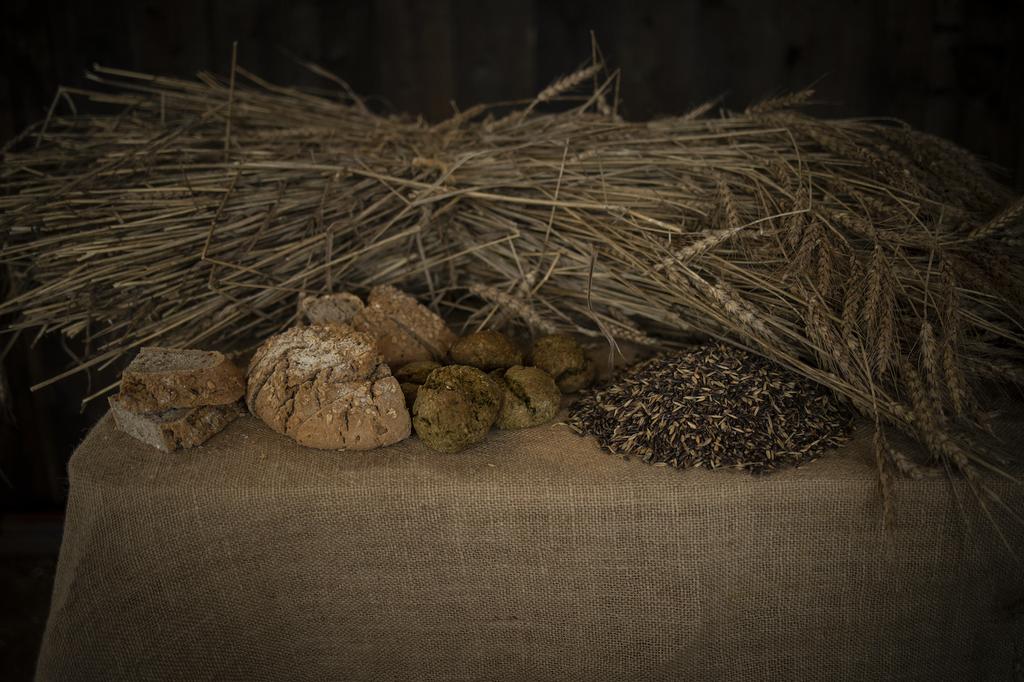
Our Llafur Ni network is an informal network of grain growers, facilitated by the Seed Sovereignty Programme. We are not legally constituted in our own right. This caused problems when purchasing our first machine.
A machine cannot be legally owned by an informal network. Although an informal structure might work if all members are trusting of one another and happy with the risk they take in sharing an asset, you cannot insure a machine that is owned informally.
While we had members of our group willing to house the machine, this led to questions over what would happen if it broke and who would be liable if something went wrong. It became clear that we needed a more formal arrangement in order to resolve these bureaucratic but important questions.
This is when we were sent the solution in the form of the newly created Carmarthen Machinery Ring. Facilitated by Social Farms and Gardens, this recently formed machinery ring is the result of a partnership with Carmarthen Council and the local food partnership Bwyd Sir Gâr Food. With funding from the Level Up Fund, they had already purchased a library of machines suited to horticultural food production. While their focus had been on local vegetable production, they were looking to move into grain production on their community-owned host farm, Bremenda Isaf. They were willing to host our grain cleaner.
The decision to place our machine at the Carmarthen Machinery Ring was motivated by the need for a robust system for ownership, maintenance and legal responsibility. While our machine would have been geographically closer to some of our grower members if located further North, we realised that we couldn’t responsibly buy the machine at all without the structure that Carmarthen Machinery Ring offered us.
It was decided that Social Farms and Gardens would take over official ownership of the machine, meaning that it could be included in their insurance policy. A Memorandum of Understanding (MOU) was drawn up between Llafur Ni (the informal network), Social Farms and Gardens and the Gaia Foundation’s Seed Sovereignty Programme. This MOU gave official ownership of the machine over to SF&G, with a clause that the Llafur Ni network could take it back in the future should they have legal structure and insurance policies in place to support it. This act of support from SF&G is what allowed us to go ahead with the purchase.
While SF&G would now officially own our grain cleaner, it has been placed in the Carmarthen Machinery ring and is open to our members to use when they need. This model of shared ownership and shared access is so far working well for us.
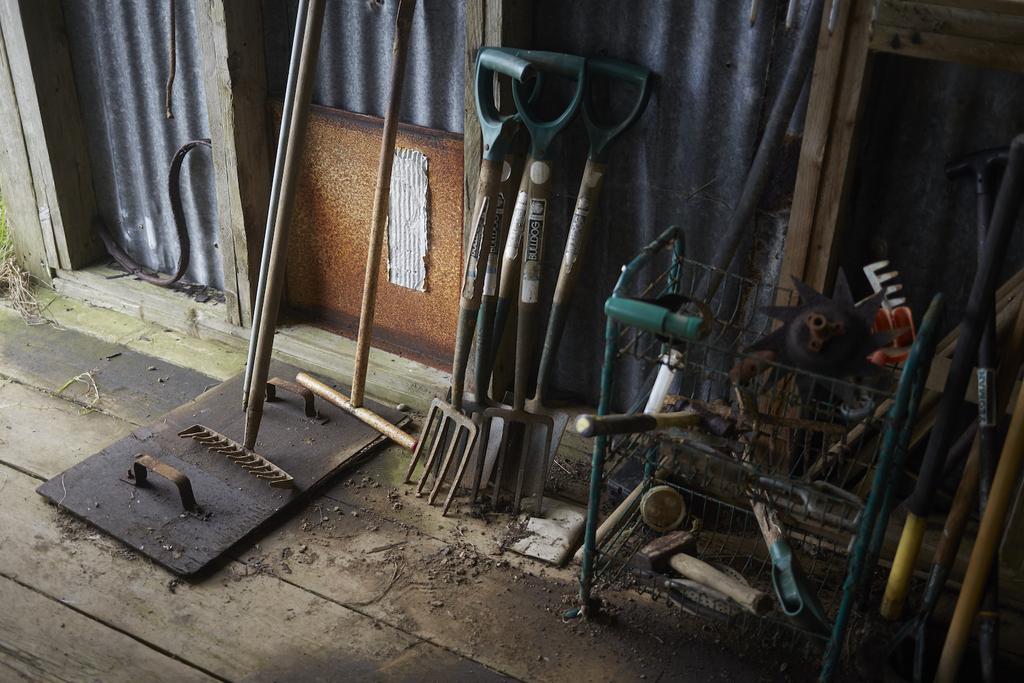
Because we decided to partner with the Carmarthen Machinery Ring, the decision on where to house our machine was clear. Carmarthen Machinery Ring are located on the council-owned farm Bremenda Isaf, fairly close to Carmarthen in South Wales. Although this location was not geographically perfect for us (a geographically perfect location for us would have been further north, equidistant between our members), it was close enough to our members for them to feasibly transport trailers of crops there when needed. The farm has good road access, ample space, covered barns to store the machinery and power. Most importantly, it is council-owned and managed by staff members from the local food partnership and SF&G. This means that the farm hosts activities for people from all different backgrounds and maintains an ‘open access’ feel (although not physically open to anyone to wander in). The model of farm ownership matches our values around shared resources and mutual aid.
Bremenda Isaf farm has a food-grade processing unit on site. Although the grain cleaner would not be able to operate in this unit (due to its size and the dust it produces), our oats could potentially go into here after cleaning for further processing.
Vermin control is always an issue on working farms, and a point of concern for us is that our grain cleaner cannot be currently housed in a space guaranteed to be free of vermin. This means that we have had to create a strict cleaning protocol for the machine, using compressed air to get any traces of grains from inside the mechanisms after each use.
Our grain cleaner has been added to the Carmarthen Machinery Ring’s list of borrowable kit. Membership of this machinery ring is open to commercial growers. The My Turn platform is used to manage bookings. This platform allows for inventory to be listed and machine availability to be viewed on a calendar.
When a user places a booking on the My Turn platform, they are asked to confirm they understand the machinery ring terms and conditions and that they have read the user manual for that machine (linked in the listing). Users will also need an induction for safe machinery use the first time they use the machine (more below).
The Carmarthen Machinery Ring booking system is managed by SF&G staff at the Bremenda Isaf farm. It is invaluable to us to have these staff members managing the My Turn platform – updating listings and ensuring bookings run smoothly.
On receiving our grain cleaner, we undertook a risk assessment of the machine, with support from the SF&G staff managing the Carmarthen Machinery Ring.
Our grain cleaner carried a medium health and safety risk. It has moving parts within the scalper and fan system, but these are housed in a metal casing and labelled. One of the concerns with our cleaner is that it is relatively large (taller than a person), carrying a risk of crushing if it were to fall. This risk has been mitigated by having locking wheels, using a scaffold platform to feed grain into the scalper (rather than the option of a ladder, which would require weight to be leaned onto the machine) and ensuring the machine will not be operated by anyone alone (we are lucky to have SF&G staff on site at the times that the machinery ring is open).
Any new users of our grain cleaner will have to undergo an induction for safe use – carried out by either SF&G staff or one of the core members of the Llafur Ni group. We plan to run a group induction to make this process less time-intensive.
As with any electrical machine, care needs to be taken that the machine is used in an area free of water, has the correct fuses installed and has cables in good condition (another reason to ensure storage is in a vermin-free area).
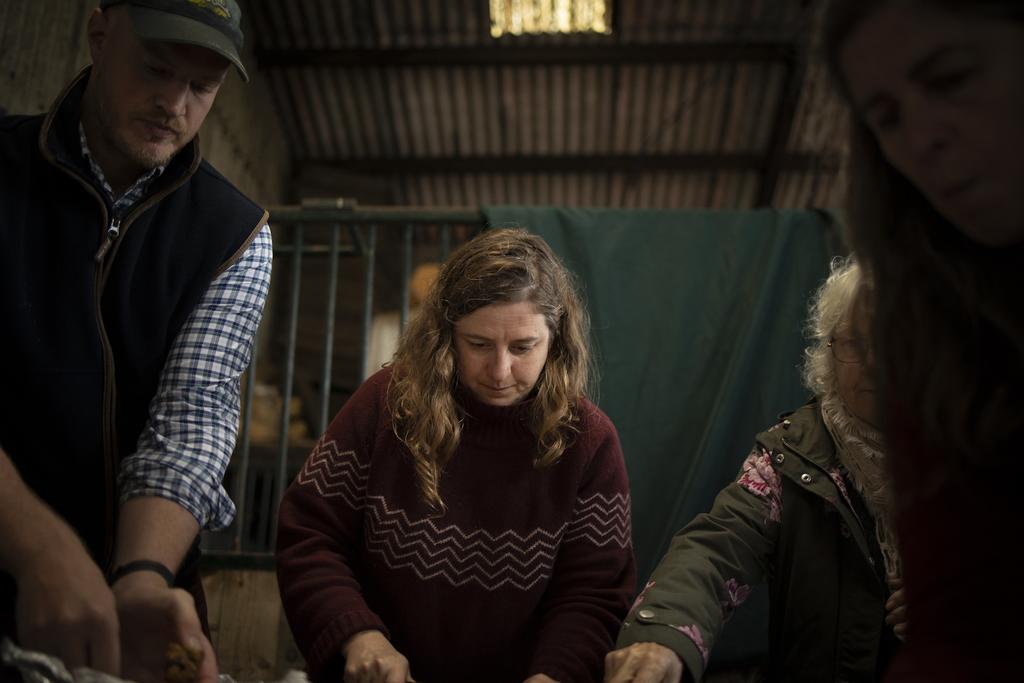
There will not be any routine repairs for our grain cleaner. The only potential cost will be for unexpected repairs due to misuse or malfunction. We do not know the potential cost of repairs, despite it being prudent to know this.
As previously mentioned, our grain cleaner is now covered under the Carmarthen Machinery Ring insurance package, covering us for theft or personal accident.
Because the Carmarthen Machinery Ring is funded, they charge a low fee of £5/day per machine. Our grain cleaner is listed for the same price. It is of note that this cost will barely cover electricity use, let alone potential repairs. If the cleaner was to be housed elsewhere in the future, we would have to consider raising this fee to ensure money was accrued for electricity bills and future repairs.
Had we not decided to purchase imported machinery collectively and house that machinery in an existing machinery ring, the members of Llafur Ni would not have access to the oat cleaning facilities needed to move their oats onto the next stage in our processing journey. Despite the challenges of navigating the above issues of ownership, insurance, user management and finances, it feels good to know that the systems we have set up will provide a foundation for more people to use this machine. For us, individual ownership would have resulted in the burden of responsibility and liability falling to one person, whereas the machinery ring option has allowed us to utilise the power of cooperation to share the burden and the benefits.